40" Rows: Broadcast:
Loam:
Clay:
Low
Moderate
High
Special Notes:
| Origin: | Native to North America | |
| Use: | Perennial, warm season, native grass provides poor grazing for wildlife and livestock. | |
| Image: |
|
|
| Plant Description: | ||
| General | Characteristics of Broomsedge Bluestem | |
| Life Span | Perennial | |
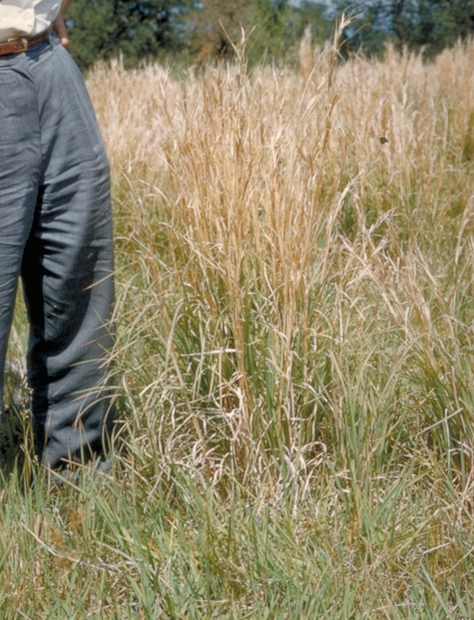
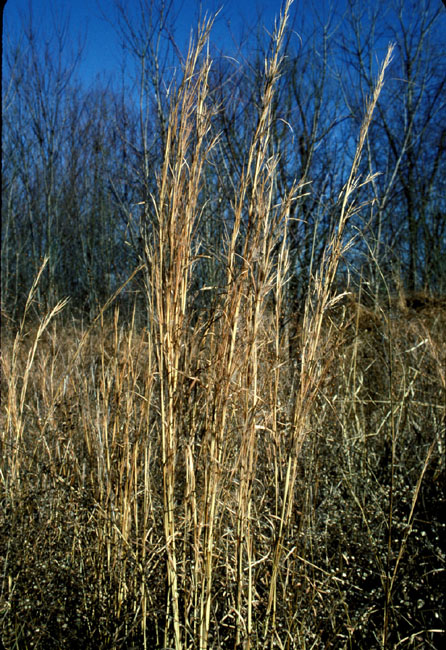
| Growth Form | tall bunchgrass | |
| Management: | ||
| Seeding Rate 40" Rows: Broadcast: |
||
| Planting Date | ||
| Planting Depth | ||
| pH requirement | 4.9 to 7.0 | |
| Rainfall requirement | 30 to 45 inches | |
| Soil texture Sandy: Loam: Clay: |
Low Moderate High |
|
| Cold Tolerance: | High | |
| General | Provides poor grazing for wildlife and livestock. | |
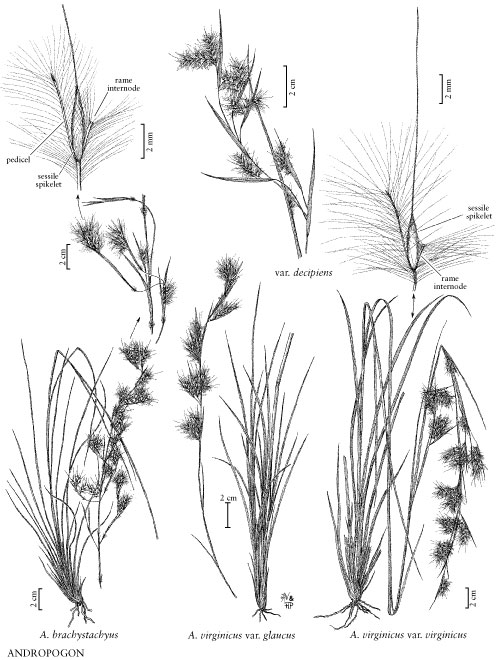
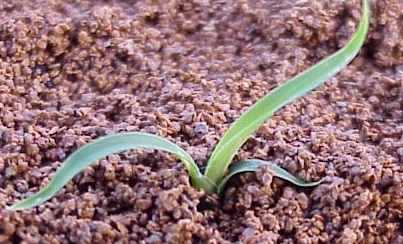
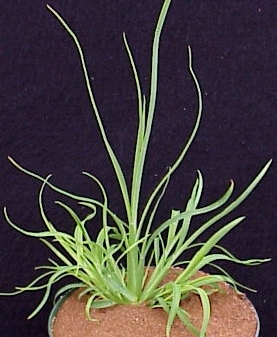
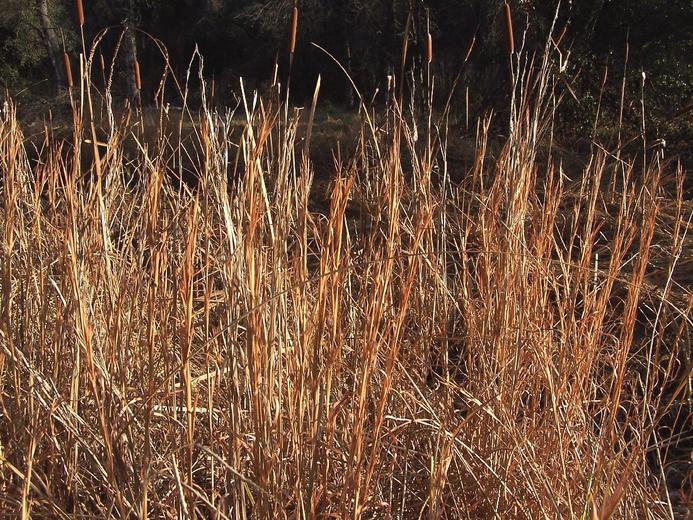
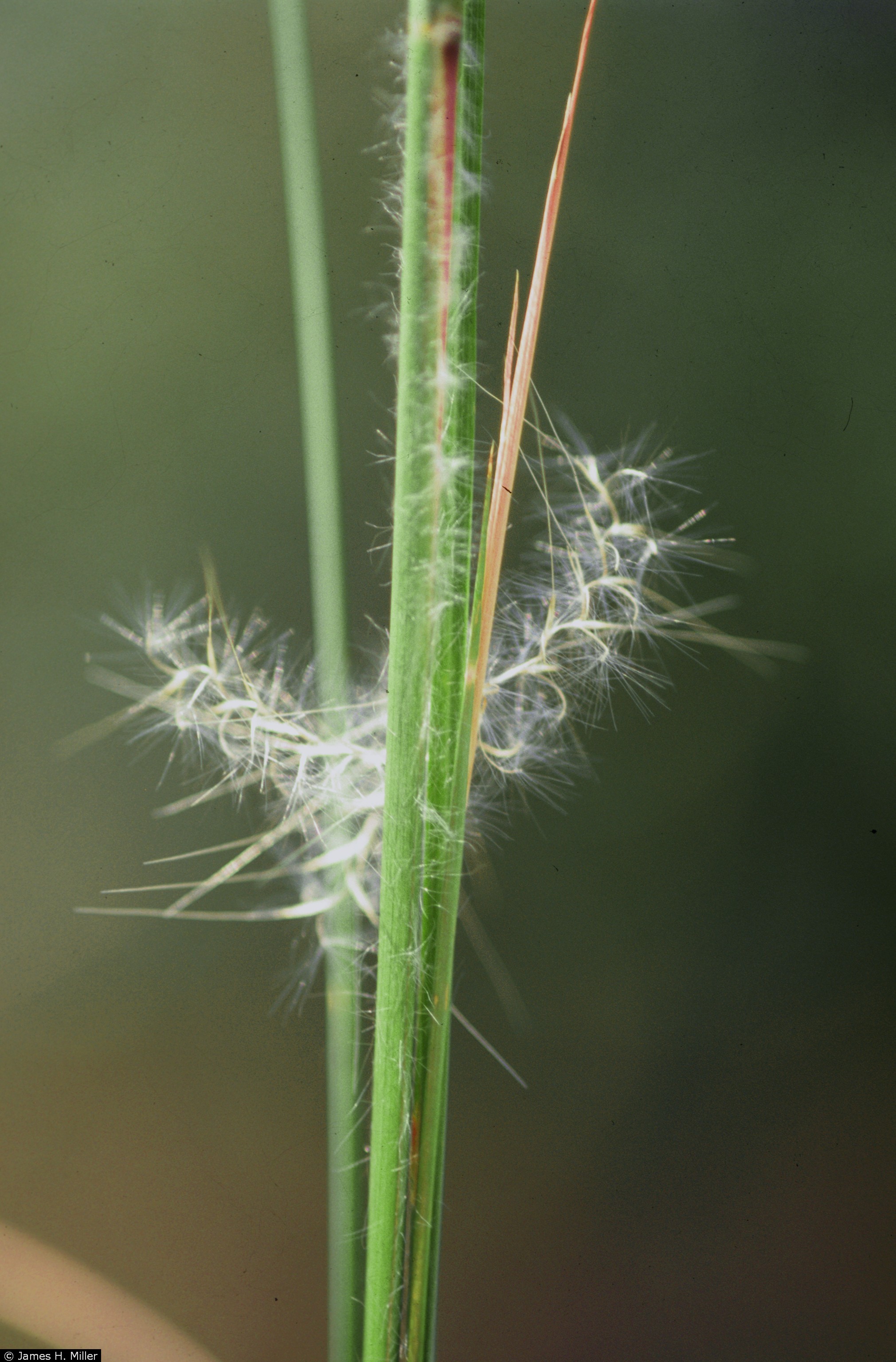
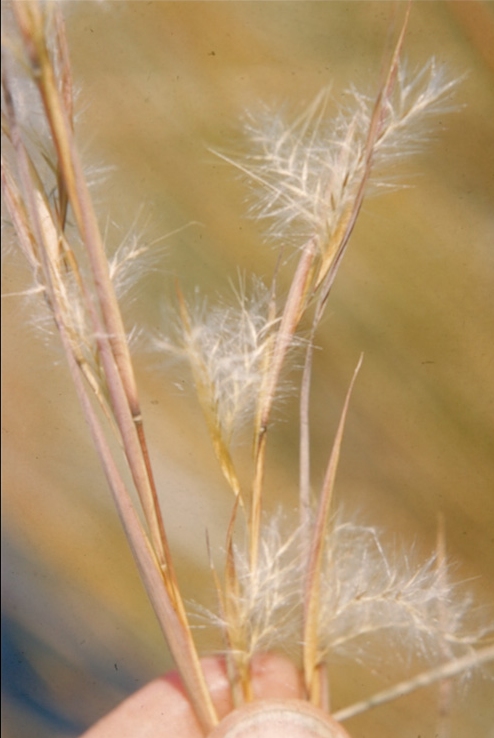
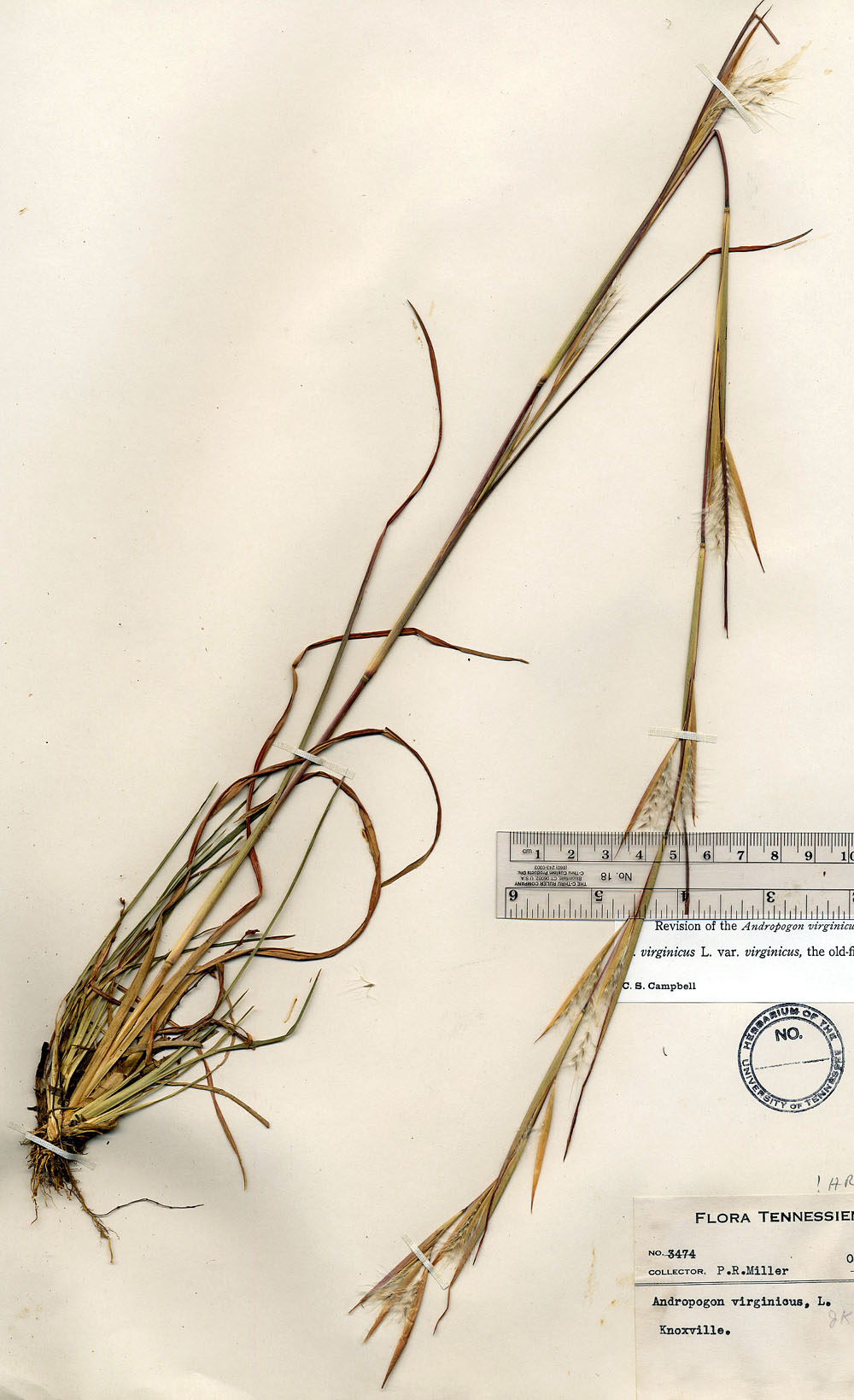
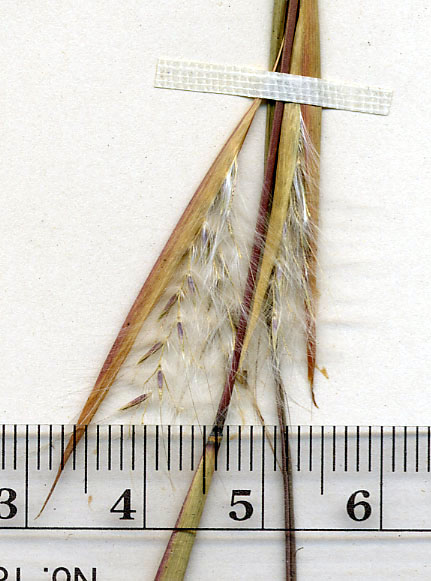
| ID Features: | The slender, erect culms are up to 4 feet tall. The flattened sheaths are overlapping and with a few scattered hairs. The upper part of the plant is rounded and the lower part is slightly flattened and keeled. The blade is . to . inch wide, 10 to 16 inches long and rough to the touch above. The ligule is small and membranous. The inflorescence has a panicle of two to four racemes about 1 inch long. The bases of the panicle branches are enclosed in an inflated, tawny spathe as long or longer than the spikelet. The upper lemma of the sessile spikelet has a straight awn that is . inch long. The pedicillate spikelet is absent. | |
Special Notes: |
Broomsedge Bluestem (Andropogon virginicus) Information #1 | |