



40" Rows:
Broadcast:
Sandy:
Loam:
Clay:
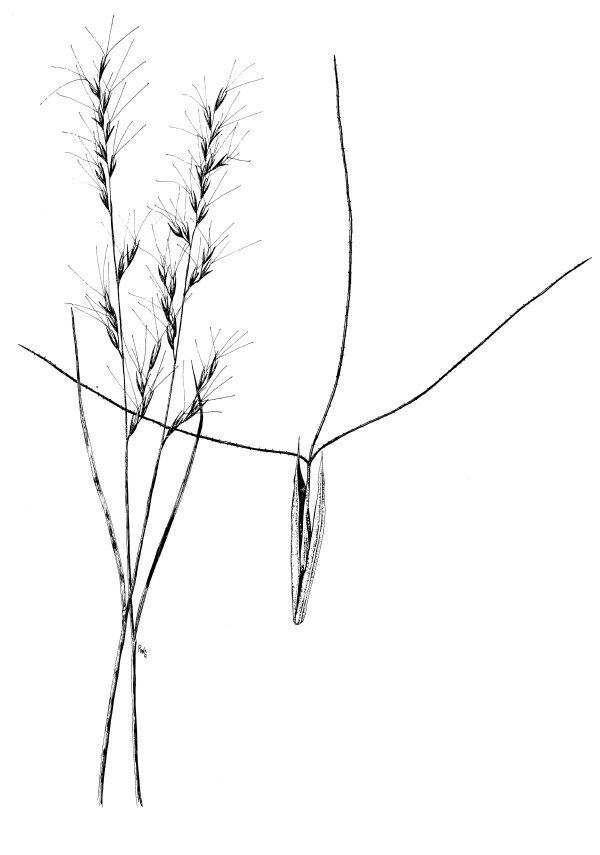
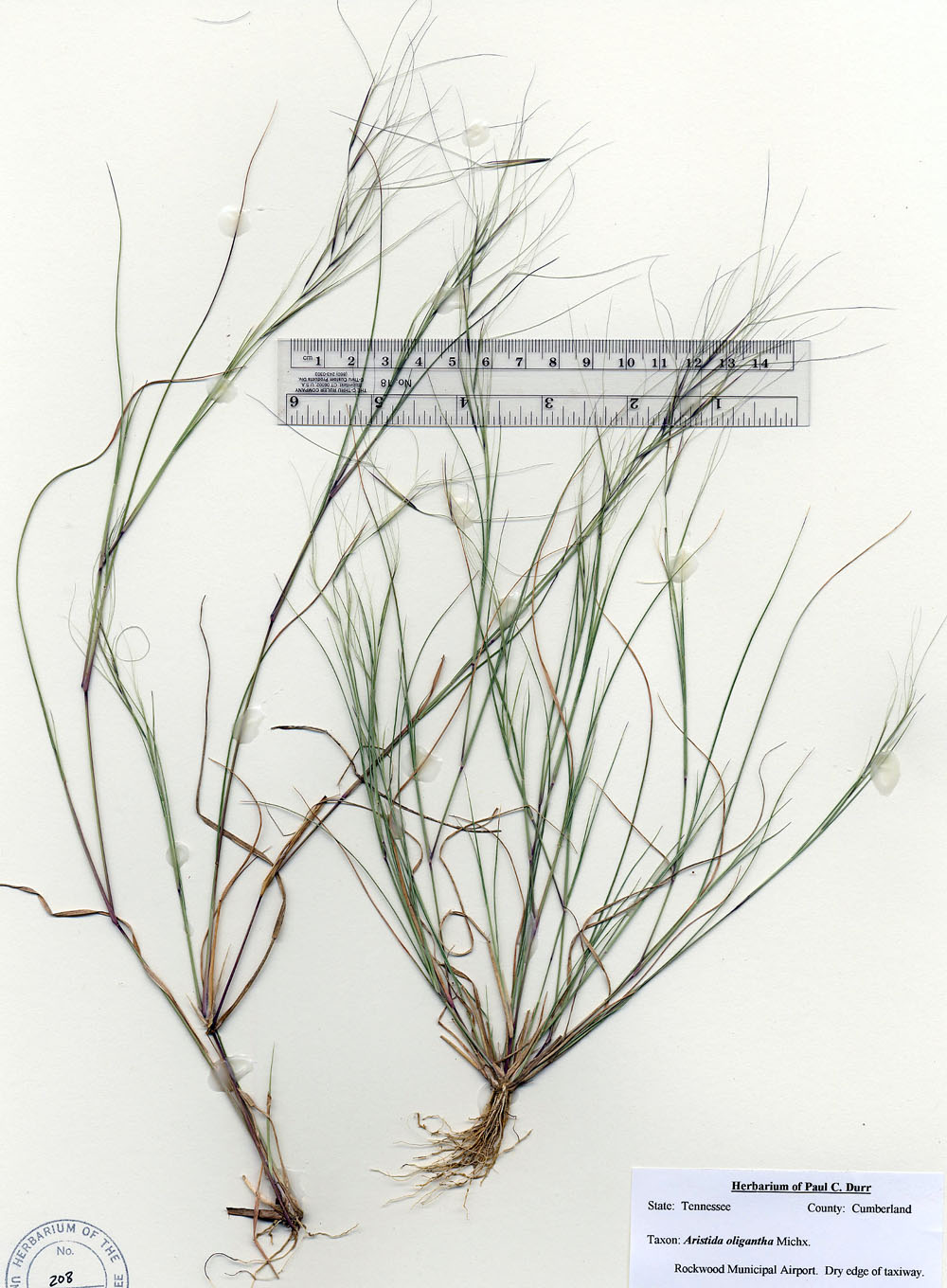
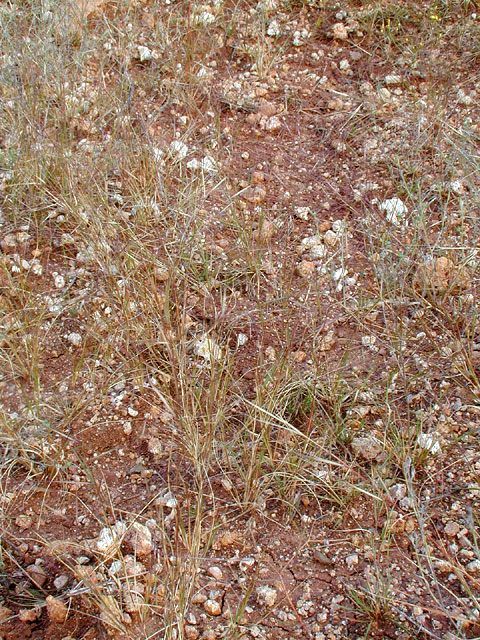
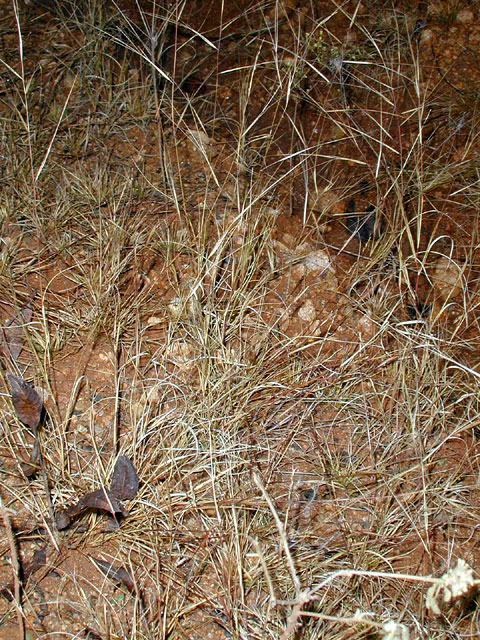
Habit: 		Annual, much branched.
Culms: 		Tufted, wiry, 30-60 cm. tall, branched at base and at all the nodes,
                smooth or sometimes slightly rough.
Blades: 	3-15 cm. long, 0.5-2 mm. wide, flat or smooth or with a few hairs, involute,
                tapering to a fine point.
Sheaths:	Loose, shorter or longer than the internodes, glabrous or often
                pilose at the throat.
Ligule: 	Small, hairy.
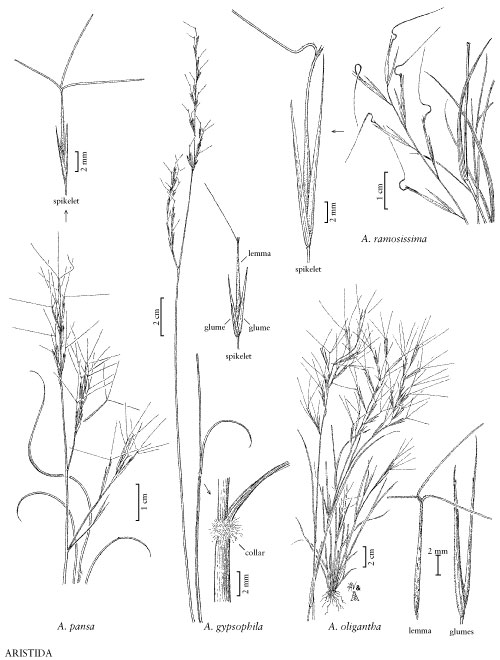
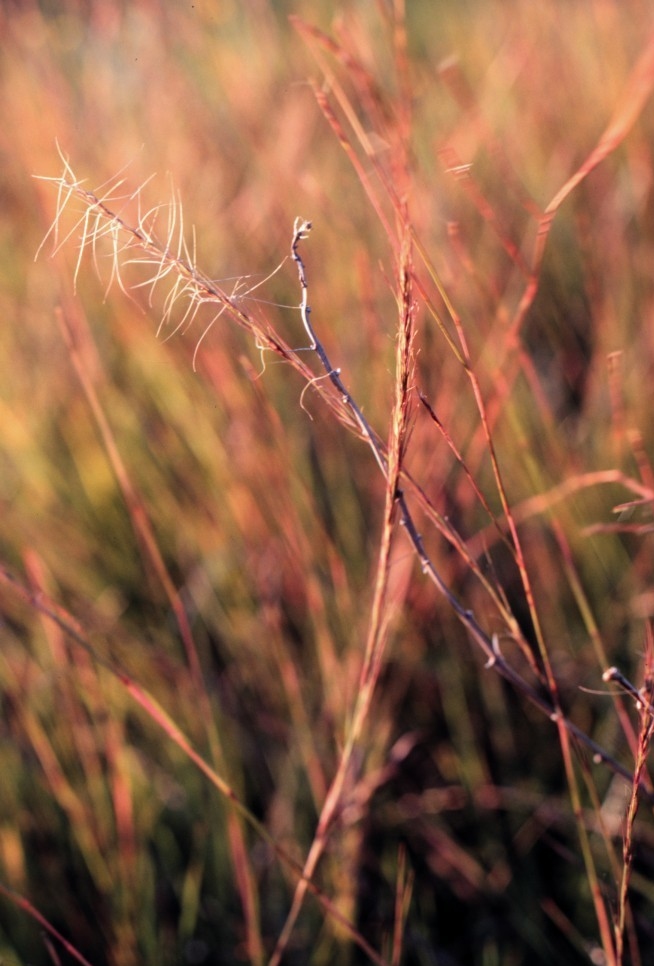
Inflorescence: 	Panicle loose, raceme like, 10-20 cm. long, the axis often flexuous
                and the few spikelets spreading.
Spikelets: 	Few, narrow, 1-flowered, on short pedicels (about 1 mm. long), the
                lower often in pairs, length of parts variable, rachilla disarticulating above
                the glumes.
Glumes: 	About equal, 2-3 cm. long, tapering into an awn, first 3-7 nerved,
                with an awn 3-7 mm. long, second 1-nerved, the awn 10 mm. long or more,
                both scabrous at least on the keel.
Lemmas: 	Exclusive of awn, 17-28 mm. long, 3-nerved, scabrous above,
                pubescent on the short callus, firm, narrow, rigid, strongly convolute,
                3-awned at the apex, awns about equal, 3.5-7 cm. long,	the central
                sometimes a little longer than the lateral ones, divergent, somewhat
                spirally curved at base.
Palea: 		Thin, included within the lemma.
Habitat: 	Open, dry, sterile soil.  August-October.
Special Notes: