

40" Rows:
Broadcast:
Sandy:
Loam:
Clay:
High
High
High
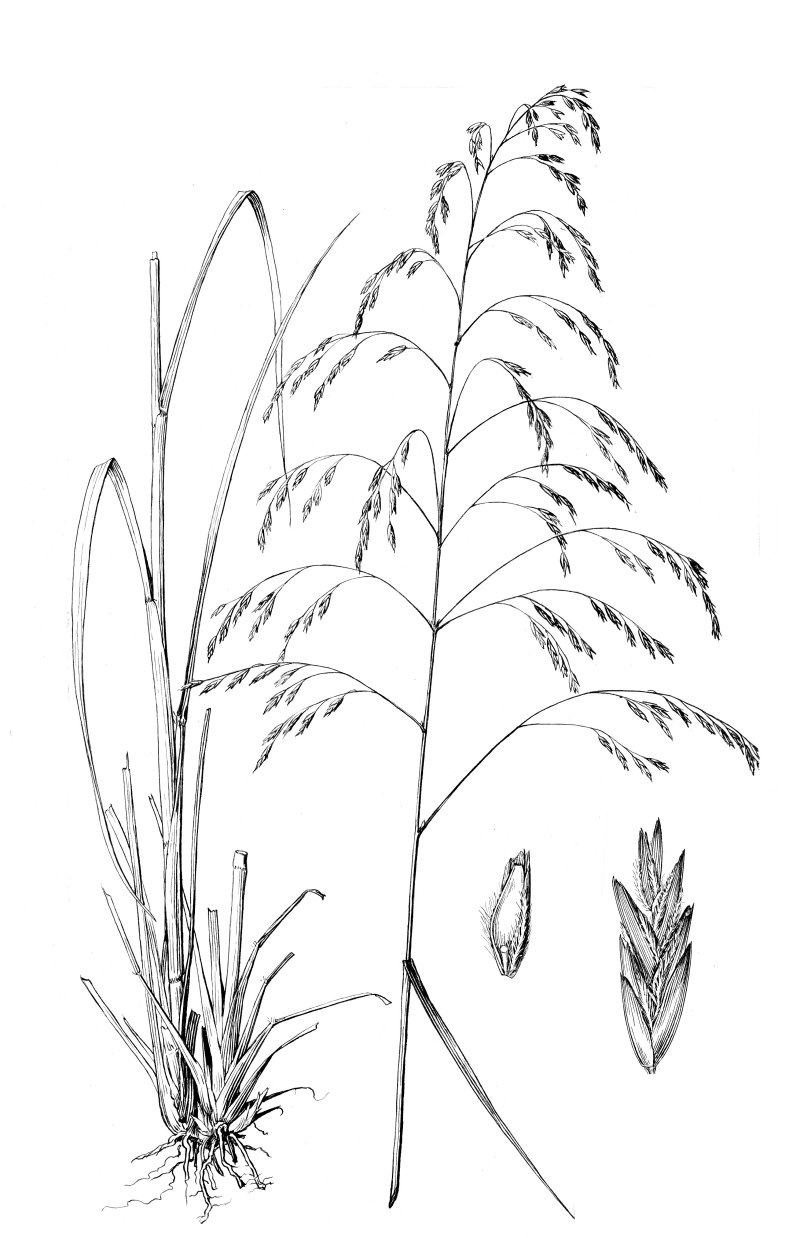
Habit: 		Tufted perennial.
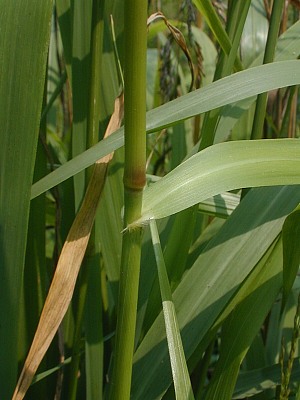
Culms: 		Erect, solitary, tufted, 1-1.5 m. high, flattened below.
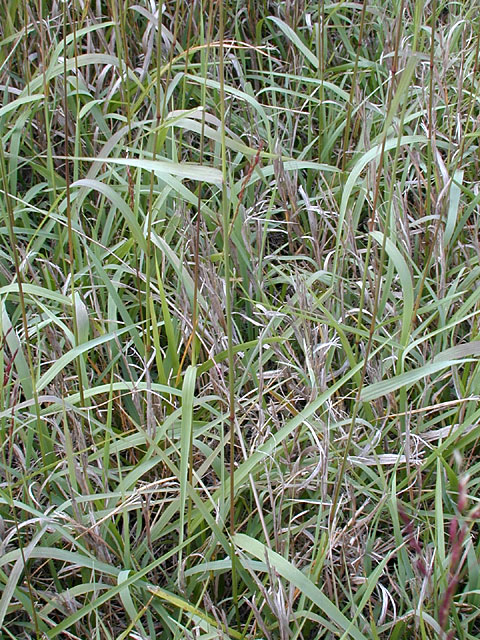
Blades: 	Elongate, 20-90 cm. long, upper shorter, 3-12 mm. wide, tapering,
                generally smooth except rough margined.
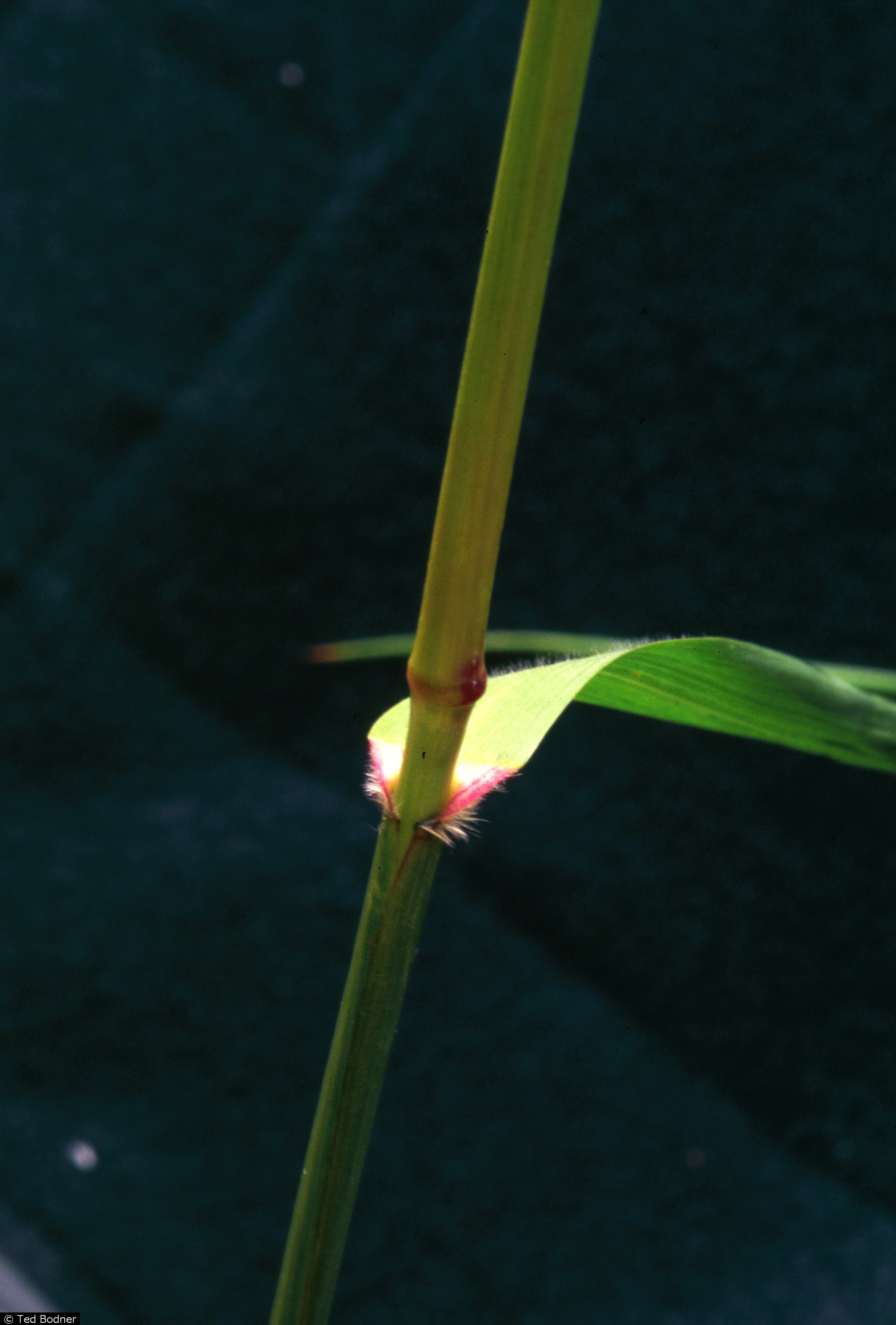
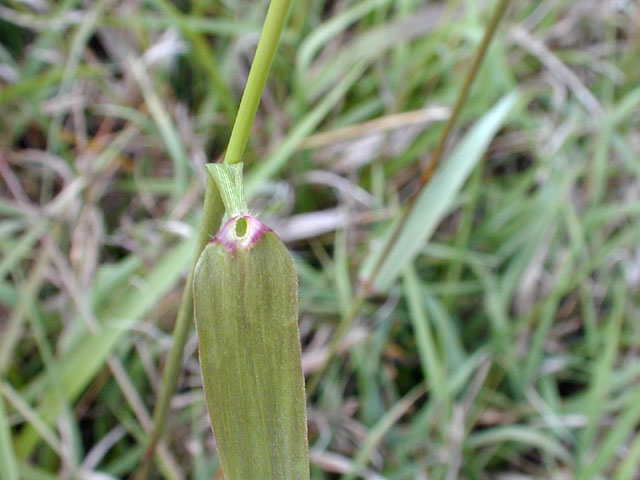
Sheaths: 	The upper shorter than the internodes, the lower
                overlapping, flattened,
		especially the lower ones, pubescent at the throat and
                collar, otherwise glabrous.
Ligule: 	A ring of very short hairs.
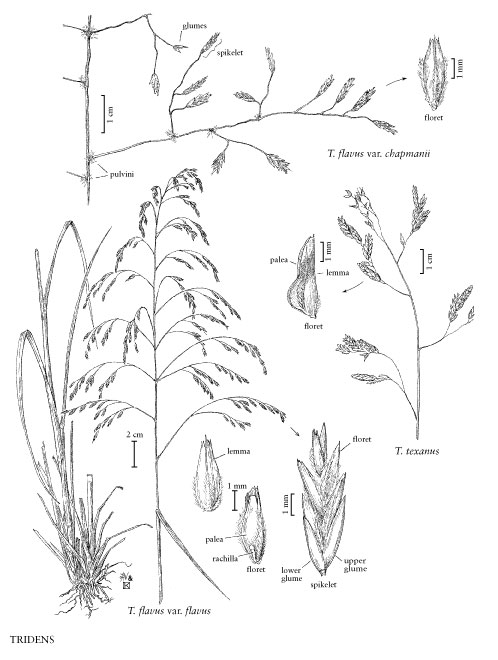
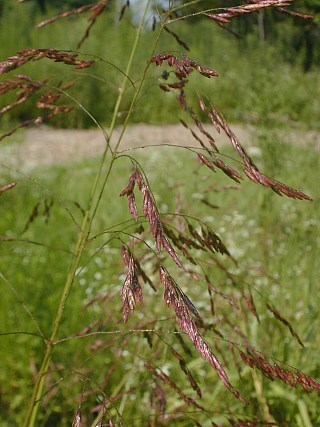
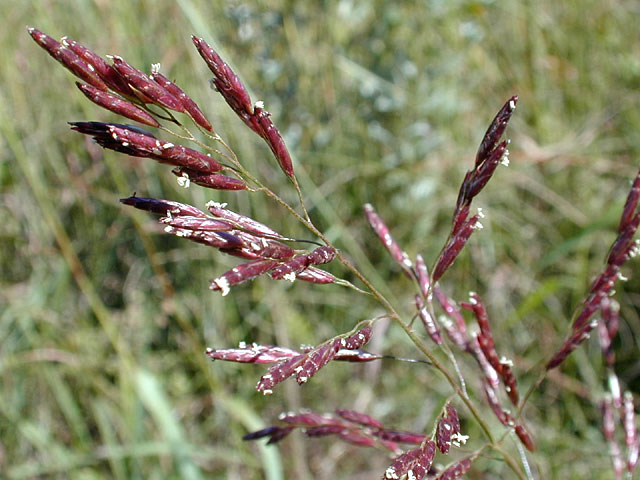
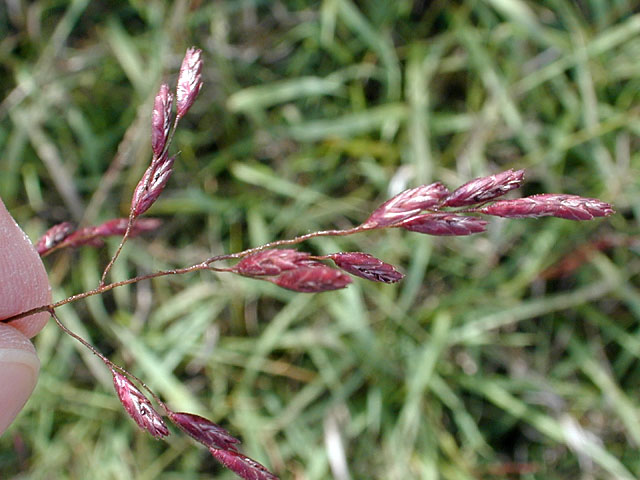
Inflorescence: 	Panicle terminal, showy, loose and open, 15-35 cm. long,
                usually purple to finally nearly black, rarely yellowish, the
                slender branches spreading to drooping, naked below, the
                axils pubescent, the axis, branches, bractlets and pedicels viscid.
Spikelets: 	5-9 mm. long, 5-8-flowered, slightly compressed, green or
                purplish, the flowers perfect, or the upper one staminate, rachilla
                disarticulating above the glumes and between the florets.
Glumes: 	Thin, subacute, mucronate, 1-nerved, unequal, 2-4 mm. long,
                shorter than the lowest floret.
Lemmas: 	About 3-4 mm. long, 3-nerved, the 3 nerves excurrent,
                pubescent on the callus and lower half of keel and margins.
Palea: 		A little shorter than the lemma, 2-toothed, ciliate on the
                nerves, somewhat bowed out below.
Fruit: 		Grain concavo-convex.
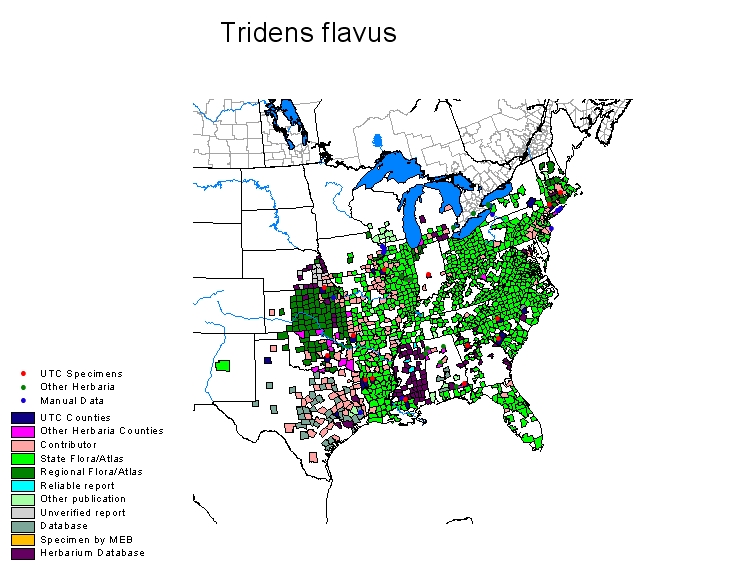
Habitat: 	Fields, prairie and open woods.  July-September.
Synonyms:	Tridens flavus (L.) A.S. Hitchc. var. flavus
Special Notes:
Purpletop (Tridens flavus) Information #2
Purpletop (Tridens flavus) Information #3