40" Rows:
Broadcast:
Sandy:
Loam:
Clay:
Special Notes:
Texas Cupgrass (Eriochloa sericea) Information #2
| Origin: | Native to North America | |
| Use: | Perennial, warm season, native grass that provides fair grazing for wildlife; good grazing for livestock. | |
| Image: |
|
|
| Plant Description: | ||
| General | ||
| Life Span | Perennial | |
| Growth Form | tufted, perennial grass that grows 3 to 3 ½ feet in height. | |
| Management: | ||
| Seeding Rate 40" Rows: Broadcast: |
||
| Planting Date | ||
| Planting Depth | ||
| pH requirement | ||
| Rainfall requirement | ||
| Soil texture Sandy: Loam: Clay: |
||
| Cold Tolerance: | ||
| General | provides fair grazing for wildlife; good grazing for livestock. | |
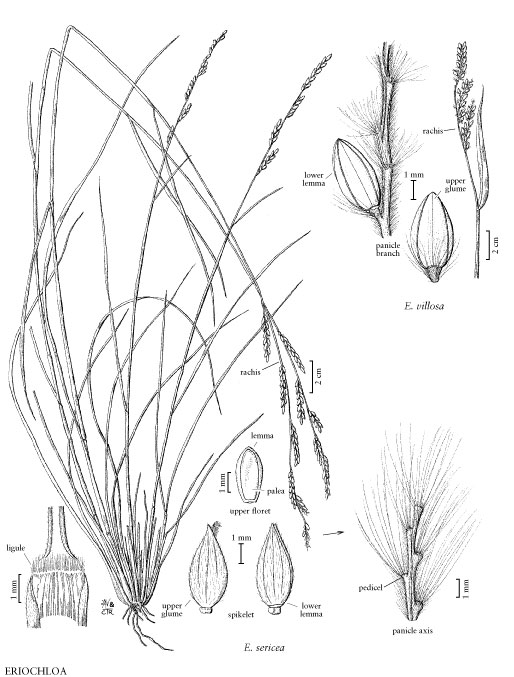
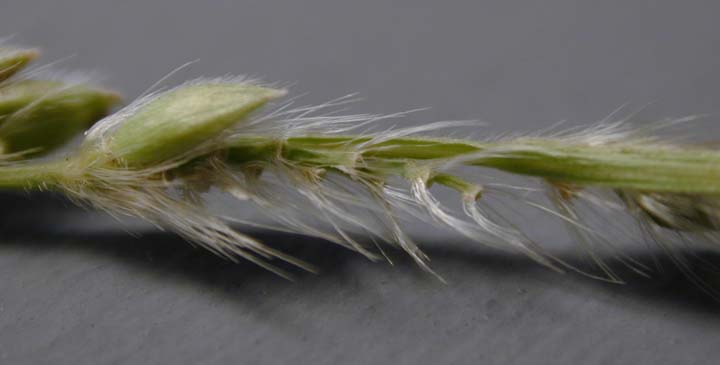
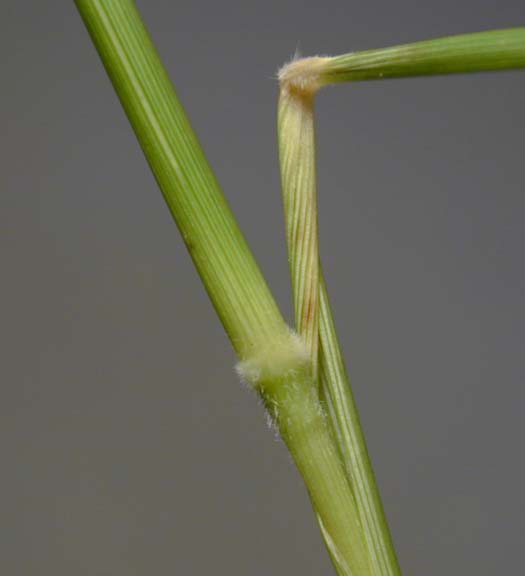
| ID Features: | This bunchgrass grows 12 to 48 inches tall in large tufts. Stems have a feel similar to a lead pencil at the base. The blades are soft and lax; the ligule is a dense ring of straight hairs. The pale-colored seedheads have singIe fuzzy seed in rows, borne on very short, hairy stems. Seeds are set in a cup having a ring-like base and fall, leaving a fuzzy zig-zag stem. | |
Special Notes: |
Texas Cupgrass (Eriochloa sericea) Information #1 Texas Cupgrass (Eriochloa sericea) Information #2 | |