
40" Rows: Broadcast:
Loam:
Clay:
Special Notes:
| Origin: | Native to North America | |
| Use: | Perennial, warm native that provides poor grazing for wildlife; fair grazing for livestock. | |
| Image: |
|
|
| Plant Description: | ||
| General | ||
| Life Span | Perennial | |
| Growth Form | tall, erect, bunchgrass | |
| Management: | ||
| Seeding Rate 40" Rows: Broadcast: |
||
| Planting Date | ||
| Planting Depth | ||
| pH requirement | ||
| Soil texture Sandy: Loam: Clay: |
||
| Cold Tolerance: | High | |
| General | Provides poor grazing for wildlife; fair grazing for livestock. | |
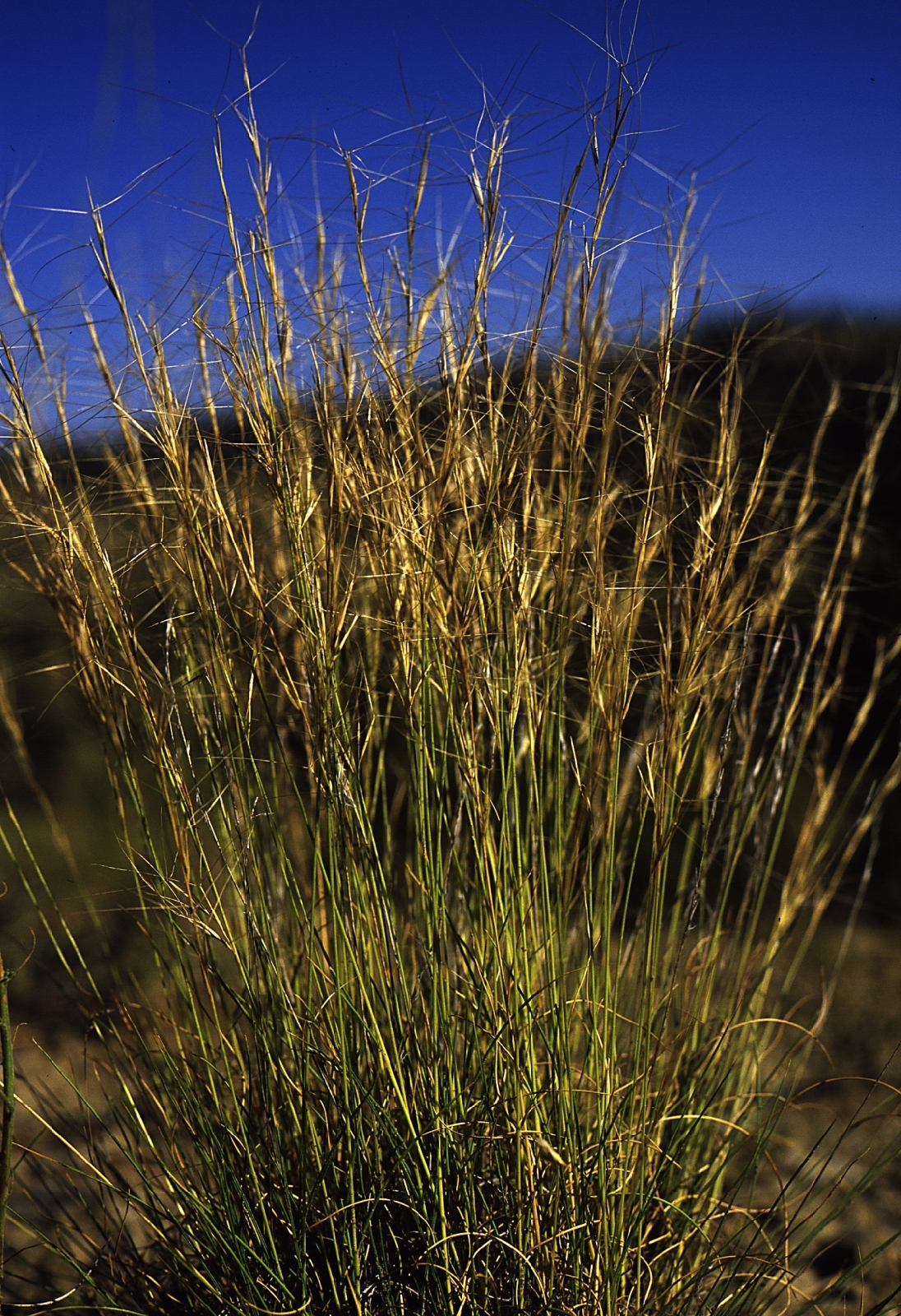
| ID Features: | This densely tufted bunchgrass has 12- to 42-inch-tall, erect stems. There are hairs on the leaf collar. The seedhead is purplish at first and then straw yellow to ashy gray when dry. Clusters of 2 to 4 spikelets grow along the main seed stem and have 3 spreading awns up to 1 inch long, with two bending horizontally about midpoint. | |
Special Notes: |
Wright Threeawn (Aristida wrightii) Information #1 | |